Question · p. 112 · 24 Feb
Is he keeping the house, or is the house keeping him?
Start here
Reading TrackerThe whole loop in one place — books, sessions, progress, patterns. Book TrackerShelves & statusMoving in
Goodreads Alternative Goodreads Import Free reading toolsBring your shelves, ratings and dates — nothing gets lost in the move.
Currently in pre-launch
RUNU is a digital reading journal. Beside every book it keeps what you chose to save — private notes called Margins: a thought, a question, a memory, a quote — along with your rating, your review, and the dates the reading actually happened.
Not yet on the App Store or Google Play. The waitlist is how you hear first.

One book, already read. Everything on this page is what stayed with it.
The book, the notes, the dates and the review on this page are one illustrative example written for the showcase — not a real reader's journal.
Finished · 100%
Reopened in RUNU, a finished book is more than a title, an author and two dates. It also holds the Margins you saved while you were still reading — private notes in your own words, each with the date you wrote it and, if you kept one, the page you were on.
Piranesi
Susanna Clarke · 272 pages
Finished 4 March · rated 4.5 · 3 Margins kept
Question · p. 112 · 24 Feb
Is he keeping the house, or is the house keeping him?
Memory · p. 190 · 1 Mar
Read most of this in a waiting room. Somehow the right place for it.
Reflection · no page · 3 Mar
Thought this was a book about a house. It isn't.
Margins
Open the book in RUNU, write a sentence, save. That's the whole thing. A Margin needs nothing but its own words — no title, no tags, no folders, nothing to process later. If it helps, mark what kind of note it is and give it the page you were on; RUNU fills that page in from wherever you already were, and you can clear it.
Leave a Margin
Is he keeping the house, or is the house keeping him?
Private to you — Margins are never shared or shown to anyone else.
An illustration of what capture holds, not a screenshot of the app.
52 min
Monday 1 March · ended on page 190
Mood · lost track of time
Memory · p. 190 · 1 Mar
Read most of this in a waiting room. Somehow the right place for it.
Two separate records. The session kept the time and the pages; the Margin kept the thought. Only the page number was carried across.
Reading sessions · context
You can leave a Margin from the book at any time. And when you end a recorded reading session, RUNU asks once — quietly, never blocking anything, always dismissable — whether you want to leave a thought, with the page you stopped on already filled in.
A Margin belongs to the book, not to the session. It keeps its own date, and its own page if you gave it one. A finished session can also carry one optional private mood — settled in, lost track of time, drifted, hard going — which describes how the reading felt, never how good the book was.
How sessions themselves work — starting, pausing, ending on a page: see the reading timer.
Rating · review
When you finish, you can rate the book — down to a quarter of a star — and write one review of it. One per book: your last word, not a running commentary, editable whenever you change your mind, with a spoiler flag if it gives things away.
A rating is a single number. It is the least of what you kept — which is exactly why the Margins are still there beside it.
Your review · 4 March
Came for the puzzle. Stayed for how kind it turned out to be. The last fifty pages rearranged the first two hundred, and I'd like to read it again already.
4.5 of 5
Journal · tracker
A book tracker helps you remember what you read. A reading journal helps you remember something about the experience of reading it. In RUNU they are the same books, seen two ways — and one is not a lesser version of the other.
The tracker asks
What am I reading, and where am I in it?
Statuses, the page you're on, start and finish dates, the sessions you recorded, the percentage that follows from them.
The journal asks
What do I want to remember from what I read?
The Margins you saved, the review you wrote, the rating you gave, and the dates that put them all somewhere in your life.
You are reading that page now.
Both, together
One record per book, kept once.
There is no separate journal to maintain. A Margin is saved beside the same library entry that already holds your progress and your dates.
Reading Journey
Your Reading Journey is the chronological view of your reading in RUNU: the books you start, the books you finish, and the Margins you save. A saved Margin appears there as an event for that book — a count, never the words. The words stay beside the book, where you wrote them.
PiranesiFinished 4 Mar · 4.5
3 Margins
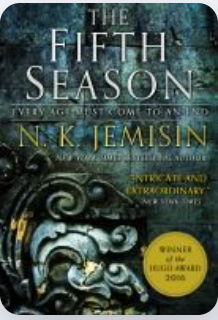 The Fifth SeasonFinished 11 Jan · 5
6 Margins
The Fifth SeasonFinished 11 Jan · 5
6 Margins
 Braiding SweetgrassReading · page 148
2 Margins
Braiding SweetgrassReading · page 148
2 Margins
 Small MerciesFinished 3 Dec · 3.75
No Margins
Small MerciesFinished 3 Dec · 3.75
No Margins
Illustrative history. Counts are what a reading history holds; the notes themselves are only ever opened from the book.
Goodreads import
A Goodreads CSV export brings your books across, maps your shelves onto RUNU statuses, and keeps the dates, star ratings and review text Goodreads recorded for them. Years of reading arrive intact.
What it cannot bring is anything Goodreads never held: Margins, reading sessions, session moods. RUNU won't invent them for a book you read in 2016 — an imported book simply arrives without them, and everything from your next page onwards is yours to keep.
Already have years of history? See how the import works.
Imports
Books · shelves mapped to statuses · dates added, started and read · star ratings · review text
Cannot import
Margins · reading sessions · session moods — none of them existed in the file
In plain terms
A reading journal is a record of your reading rather than a list of your books. Where a list stops at the title, a journal keeps what the reading was like: the notes you made, the questions you had, the review you wrote afterwards and the dates that place it all somewhere in your life.
RUNU is a digital reading journal built around Margins — private book notes written in your own words and kept beside the book they came from. Around them sits the rest of the record: your reading status, the page you reached, your start and finish dates, the reading sessions you chose to record, your rating and your one review of the book.
Call it a reading journal or a book journal — either way, it's the same idea: reading notes that stay with the book instead of scattering across a separate notebook or app.
RUNU is currently in pre-launch, and your reading is private by default.
Answered from what RUNU does today, not what it may do later.

RUNU is a reading journal and reading tracker currently in pre-launch. Join the waitlist to hear when it opens.
Check your inbox
We've sent you a confirmation link. Confirm your email to secure your place on the RUNU waitlist.
We couldn't join you right now.
Please try again.
No App Store or Google Play link yet — that's the point of the list. See our Privacy Policy.